
HYPOCHONDRIAC!
What happens when you can't perform pain the way they expect you to

I’ve been called a hypochondriac for as long as I can remember.
It’s felt like a current I’ve had to swim against just to be taken seriously.
Part of that, I believe, is that I was born a girl in 1985.
I grew up in a time when people were often less curious about girls’ symptoms than they were suspicious of them (especially if those girls were articulate).
I learned early that people didn’t believe me when I said I didn’t feel well. I wasn’t making the “right” faces or reacting the way other kids did.
“You don’t look sick,” they’d say. “You seem fine.”
So I learned there was a way you were supposed to perform discomfort and/or pain. I watched how other people acted and tried to imitate it (groaning, holding my stomach, making it visible) so that someone might finally take me seriously.
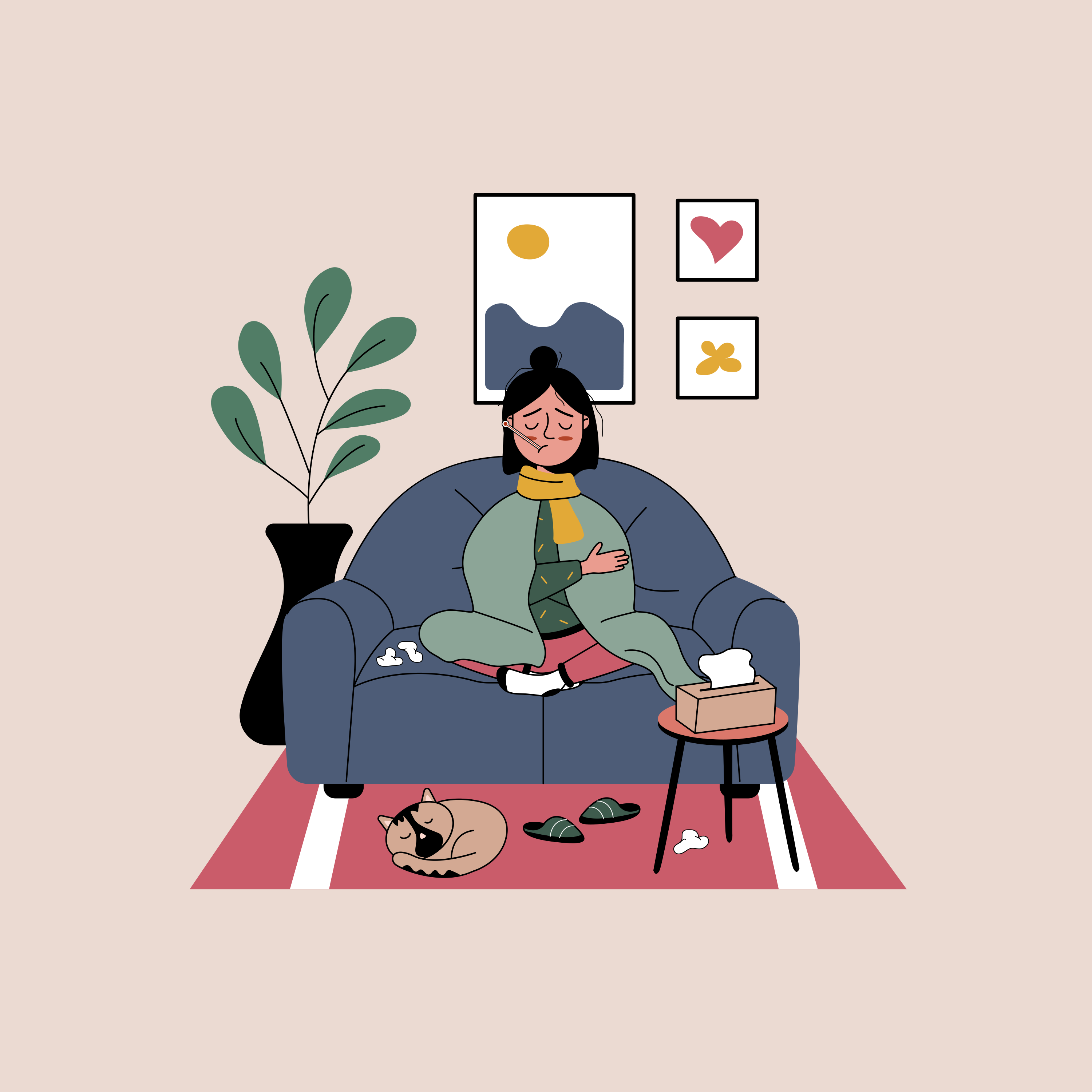
Then I was told I was “acting” or “faking.”
Which, in a way, I was. I was trying to translate what I actually felt into something other people would recognize. But that, too, became evidence that I wasn’t “really” sick.
What no one understood (and what I didn’t yet understand) was that I was an autistic girl born in 1985. An autistic girl who also had a genetic connective tissue disorder, autonomic dysfunction, and now, possibly, a structural issue like Chiari malformation. I had no language for any of it.
As a child, all I could say was: “My head hurts.” “I’m dizzy.” “I’m nauseous.” “My knee hurts.”
My temperature would be taken. If I didn’t have a fever, I was told I was fine.
If I kept insisting, I’d be taken to the doctor. They’d run basic tests, find nothing obviously wrong, and send us home. And on the way home, I’d be scolded for “attention-seeking” and for making my parents miss work yet again.
I wasn’t diagnosed with autism until 2019. I received diagnoses of POTS (postural orthostatic tachycardia syndrome) and hEDS (hypermobile Ehlers-Danlos syndrome) in 2021. Now, at 40, I’m finally being evaluated for Chiari malformation with an MRI.
One of the reasons these diagnoses came so late isn’t just gender bias (though that’s definitely real and well-documented). It’s also that autistic people often express pain and discomfort differently than neurotypical people. Our internal experiences don’t always match expected external cues.
So if you’re an autistic woman, the odds of being misunderstood multiply.
You learn quickly that stating your pain plainly doesn’t work. So you try to show it. But when you do, it doesn’t quite come across the “right” way, and that becomes another reason not to be believed.
Ironically, I did eventually develop health anxiety. I would hear about serious illnesses and immediately wonder if that’s what I had. But that didn’t come from nowhere. It came from living with persistent, unexplained symptoms that I was told were “nothing,” even though they clearly weren’t normal for me.
Of course my mind searched for explanations. I knew something was wrong. I just didn’t know what.
And it turns out, it wasn’t “nothing” like I’d always been told it was.
Decades later, test after test confirmed that I do, in fact, have real, diagnosable conditions, many of which I had likely been living with all along. For the first time, my experiences made sense in context.
I shared my diagnoses with my family. The response was mostly a shrug.
Some seemed genuinely confused. “But you never complained about this as a child.”
Yes, I did.
What they remember isn’t the content of what I said. They only remember that I was “always complaining,” and that doctors kept saying “nothing” was wrong.
But nothing showed up because the tests being run weren’t designed to detect what I had.
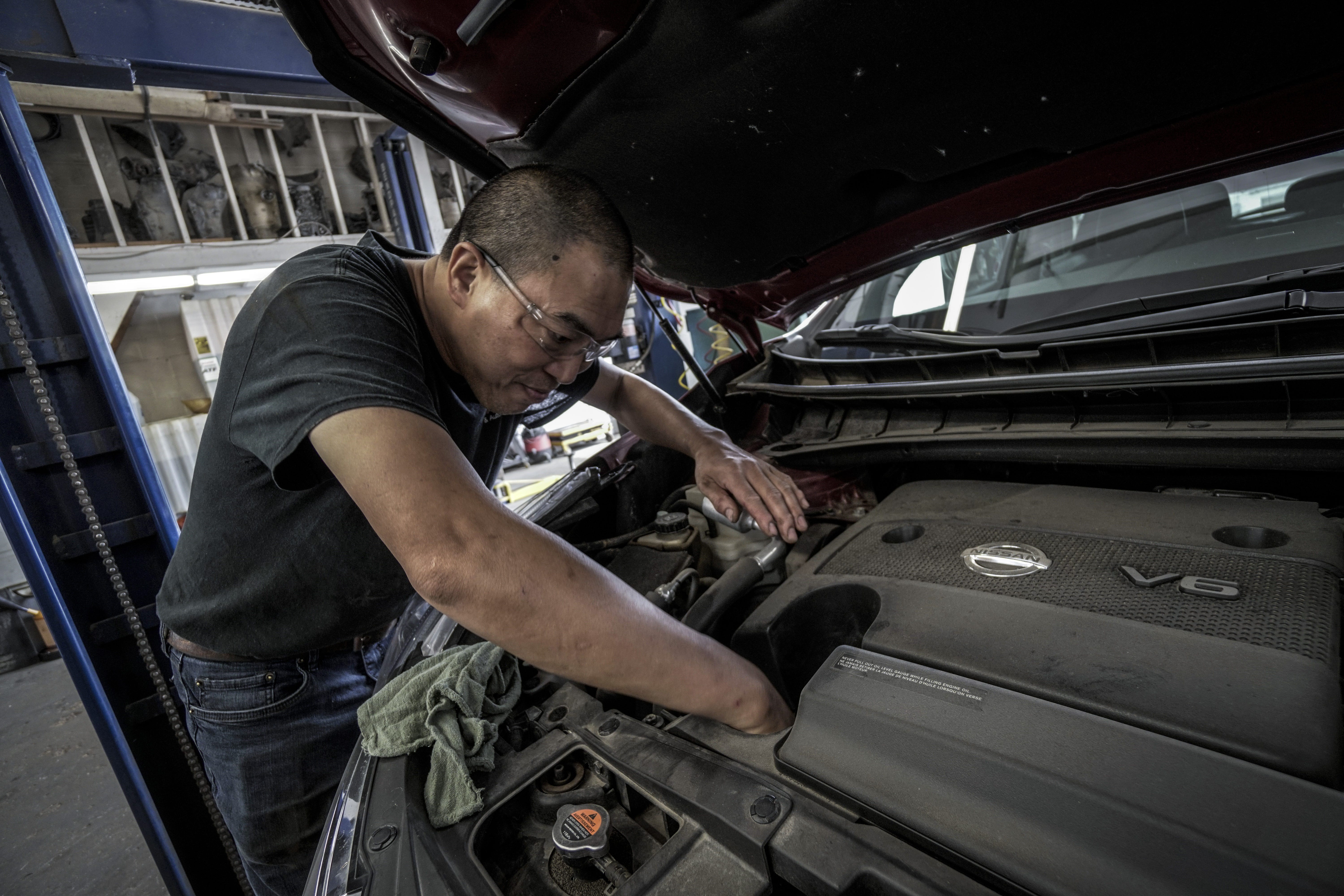
It’s like saying nothing is wrong with a car’s engine after you’ve only checked the oil dipstick. Conditions like autism, POTS, and hEDS aren’t identified through routine bloodwork.
Diagnosing them typically requires clinical evaluation, pattern recognition, and, in some cases, specialized testing (like tilt table tests for POTS or imaging for Chiari malformation).
I had these conditions all along. They just weren’t being looked for.
And yes, gender played a role. Historically, medical research has underrepresented women, and women’s symptoms have often been minimized or attributed to anxiety or emotional causes. That bias has had real consequences.
Autism, too, was long misunderstood. It was once thought to be far more common in boys than girls, in part because diagnostic criteria were based on how it presents in boys. Many girls (especially those without intellectual disability) were overlooked or misdiagnosed.
When I was growing up, someone like me might have been labeled with “Asperger’s Syndrome,” a term that was used at the time for autistic people without language or intellectual delays. Today, that presentation would typically fall under autism spectrum disorder, often described as Level 1 support needs.
My brother was recognized as autistic. I wasn’t. Not because I didn’t meet criteria, but because no one was looking for it in someone like me.
Instead, I was labeled: “hypochondriac,” “dramatic,” “attention-seeking.”
Those labels stick. They shape how you see yourself. And they make it much harder, later, to trust your own body and your own perceptions. That’s what I’m still working through, even now, as a 40-year-old woman.
Because medical gaslighting is traumatic.

It’s one thing to be told, over and over, that nothing is wrong. It’s another to later learn that something was wrong and that it was missed, dismissed, or minimized.
And it’s especially hard when, even after objective testing and formal diagnoses, some people still don’t quite believe you.
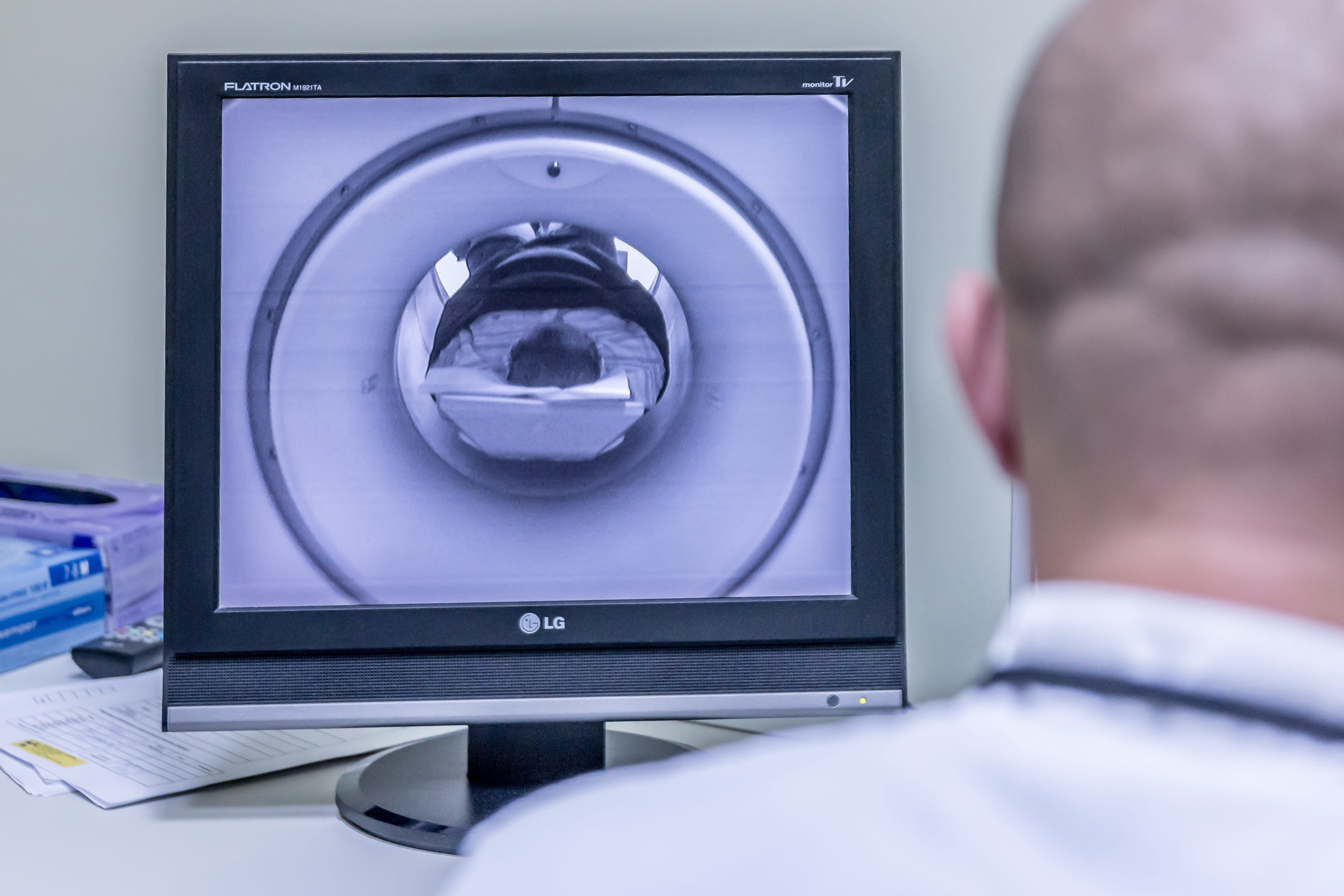
There’s a quiet implication that maybe you influenced the outcome, or that maybe you convinced doctors of something that isn’t real. But that’s not how MRIs work. That’s not how genetic evaluations work. That’s not how tilt table tests or autism assessments work. These are structured, evidence-based processes.
And still, the curiosity just isn’t there. Even among those who do believe me, there’s often an expectation that these conditions can be “managed” to the point where I should be able to live a normal life, and that if I’m not, it’s because I’m not trying hard enough.
That, too, is exhausting.
Because this isn’t about effort. It’s about reality. And I’m still learning how to live in mine.
And I know I’m not the only one.
Statistically, women are more likely than men to live with chronic health conditions, and more likely to be dismissed, misdiagnosed, or diagnosed later (especially when it comes to autism, where so many of us were simply never seen clearly in the first place).
So if you’re a chronically ill, late-diagnosed (or still undiagnosed) autistic woman reading this, I want you to know that I see you. I understand what it’s like to live in a body that doesn’t communicate in ways others recognize, and to be told, over and over, that your reality isn’t real.
Even if the people in your life, whether that’s your family, your friends, or even your doctors, don’t fully understand you, please understand that doesn’t make you wrong.
It doesn’t make your pain any less real.
There is nothing defective about the way you experience your body or express your discomfort. And even if it takes time, even if it takes years, there is a path toward understanding yourself on your own terms, and toward building a life that honors what you’ve known all along.
I don’t think my mother understands that I have been AuADHD all my life and didn’t just “catch” it a few years ago. Like you, I was always quite academic and read lots of books and did reasonably well at every educational level - from O levels (you were born in the year that I was in Lower Sixth, now called Year 12), A levels, Undergraduate Degree and a professional qualification. So no one thought to question why I had difficulties making decisions, was impulsive, disorganised, chronically clumsy and demand avoidant. I was teased for it by my family. It was only when I was perimenopausal that the symptoms got worse and I could no longer mask. I don’t think anyone who isn’t neurodivergent understands how exhausting it is. And they confuse intelligence with executive function. Yes, ask me to write an essay on the socio-political factors that cause poverty and I’m your gal. Ask me to balance my bank account or decide what to take with me on holiday (apart from everything) and I’ve got nothing 🤷♀️
Thank you for being so honest and writing about your experiences so some of us don’t feel quite so alone ❤️
The title sucked me in immediately! Oh how many times I've been called this. Thank you for your words on this. Beautifully said!